
States’ arts funding declines, but Ohio bucks trend with modest growth
by Anthony Morris/Kent State NewsLab
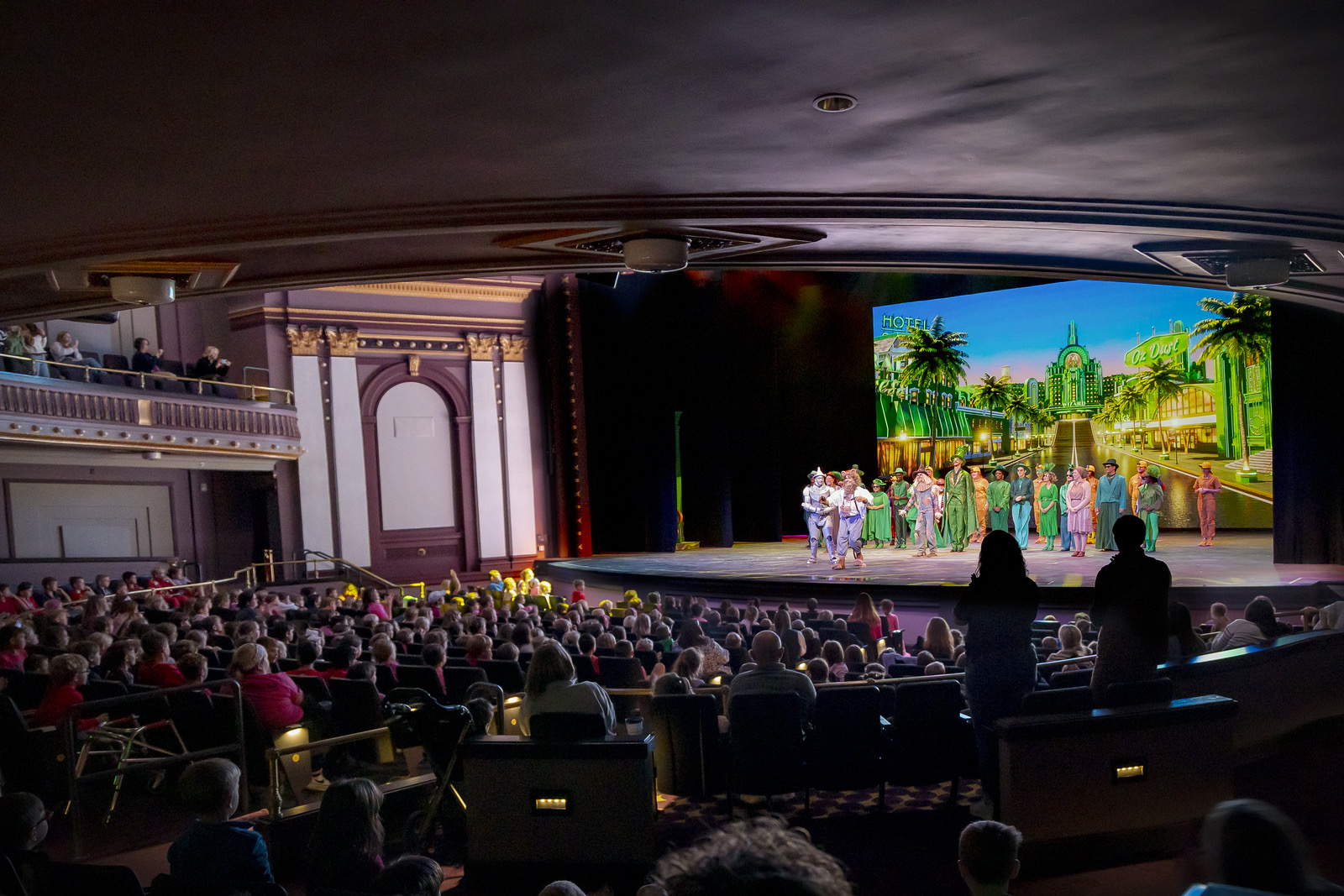
About half the 100,000 audience members who attend productions by The Children’s Theatre of Cincinnati are school children. The price of a ticket is $30, but no school pays more than $12.
“Last year we provided over a million dollars in ticket subsidies to schools,” said president and CEO Kim Kern. “[For] many of whom it was the children’s first experience with live theater and [for] many of whom it was their only opportunity to see live theater,”
Kern’s organization depends on funding from organizations like the Ohio Arts Council to keep their ticket prices low or free for children in need. “We are a nonprofit… and our mission is to provide access to all children to live theater,” she said.
Over the past year, many state arts agencies nationwide have reduced their funding for artists, art programs, arts education programs in schools and other related organizations. But Ohio actually increased its arts funding by 4.5% to $26.7 million, making it 14th in the nation in per capita spending.
According to a report from the National Assembly of State Arts Agencies, state and jurisdictional art agencies (SAAs) reported a total of $646 million in total legislative appropriations in 2026, representing a 5.9% decrease compared to 2025. Per capita appropriations to SAAs fell to $1.88 this fiscal year, down by $0.12 in 2025, a 6% decrease. The total legislative appropriation per capita in Ohio was $2.25.
The Ohio Arts Council is a state agency that funds and supports the arts in Ohio communities. “Here in Ohio– there’s no constitutionally guaranteed funding for the arts,” said Justin Nigro, operations and public affairs director at the Ohio Arts Council. Funding for the OAC is determined by the governor of Ohio and Ohio legislature.
“We’ve been fortunate to earn their support really, across successive governors, across successive legislative leaders– there is just a shared vision that public funding for the arts is something worth investing in.”
Nigro said the funding that stems from the governor and the current Ohio General Assembly primarily reflects the public sentiment of Ohio.“When you look at the public mandate, Ohioans strongly support public funding for the arts. When we survey the public, we find that supermajorities of Ohioans both know that their tax dollars are invested in the arts and then support that continued investment.”
The OAC funds arts and cultural programs/activities across all 88 counties in Ohio, and their work directly impacts organizations like the Cleveland Museum of Art and the Columbus Fashion Council, as well as smaller organizations and programs like the Bach Society of Dayton, arts gallery Akron Soul Train and Harding Elementary School in the Youngstown City School District.
Despite the overall decline of arts funding from states in the U.S. this year, Ryan Stubbs, chief program and strategy officer for the NASAA, isn’t alarmed. “A lot of arts organizations are still experiencing a lot of financial pressure, and we do see some slight declines in agencies and public funding overall, so I would say the story isn’t rosy– but it’s also not something where I think we can say there’s a sharp decline going on for funding in the arts in this country.”
Even when considering the Midwest and their mixed accounts of funding, Stubbs said it’s difficult to prescribe a decline toward a state or region based on how other states operate. Each state has its own climate and trends.
Ultimately, support for the arts in Ohio is attributed to the work of state agencies like the Ohio Arts Council, as well as public support. “I think in places like Ohio and Minnesota you see some of those things coming together where the agencies are able to provide public value and legislators and authorizers and the public see those things as worthwhile investments in their states,” Stubbs said.
OAC’s Justin Nigro said there’s a multiplier effect that benefits local communities when arts and events stimulate public spaces and local economies. “We measure about 292,000 jobs that are supported by the arts, so that’s a big impact in Ohio,” he said.
Also, Nigro said the value of the arts is seen in educational outcomes for children. “Everything from better attendance/graduation rates, better math and reading skills, higher standardized test scores, all these things that we can quantifiably measure when we know that arts education is being offered in classrooms across Ohio.”
Kim Kern said she has witnessed the positive effects of the arts on children many times. For instance, during the Children’s Theatre of Cincinnati’s performance of “The Princess and the Frog,” they partnered with international organization Back2Back ministries to help host children from vulnerable backgrounds, including those who have survived abuse and abandonment, attend the show for free. “At the end of the show,” Kern said, “one of the little girls in attendance said to one of the adults from Back2Back, when I grow up I want to be a kind princess.”
“That little girl who was dealing with unimaginable life circumstances left our production envisioning a future in which she could be a princess,” she said. “That’s why we do what we do.”
This story was written by Anthony Morris for Kent State NewsLab, which shares stories by Kent State University School of Media and Journalism students with professional media partners. This story was produced in association with Media in the Public Interest and funded in part by the George Gund Foundation.
Photo from The Children’s Theatre of Cincinnati’s “The Wizard of Oz: Youth Edition” provided by The Children’s Theatre of Cincinnati.