
As overdoses in schools rise, many are keeping reversal medications on hand
By Kayla Gleason, Jack Bordeleau and Xavier Asher
The Statehouse Reporting Project
Kansas City firefighter Josh Magaha teaches fentanyl and opioid overdose awareness at schools in Kansas.
“Every single school I’ve presented in, we’ve had an overdose,” he said this year while testifying in favor of a Kansas bill that would require school districts to provide fentanyl abuse education programs and have overdose reversal medications in every school. The bill didn’t make it out of the committee stage.
Most states allow schools to carry overdose reversal medications. Now, some states are beginning to require it.
Magaha said all of the schools he’s worked with in Kansas have a supply of Narcan, a brand-name version of naloxone.
Overdoses among adolescents are on the rise nationwide. More than 700 teens died from overdoses in 2022 and 2023, according to KFF, a source for health policy research and news. That figure was just 282 in 2019.
Overdose reversal medication was not administered in 70% of fatal overdoses for adolescents ages 10-19, despite a bystander being present in two-thirds of the cases, according to a review of data from the Centers for Disease Control and Prevention.
New Ohio law allows schools to carry overdose reversal medications
In Ohio, legislation clarifying that K-12 schools may carry and administer naloxone or Narcan was signed by the governor and went into effect in January.
State Rep. Dontavius Jarrells, D-Columbus, one of the cosponsors of House Bill 57, said the legislation was proposed by a constituent whose school-aged son died from an overdose.
“The reality is, we are seeing more and more younger kids getting their hands on substances,” Jarrells said. “Whether it’s vapes, marijuana that’s laced with fentanyl or other products, students are unknowingly taking substances that can cause an overdose.”
In 2023, the U.S. Food and Drug Administration approved naloxone nasal spray as an over-the-counter drug safe to use for opioid overdoses.
Since then, the White House’s Office of National Drug Control Policy and the federal Substance Abuse and Mental Health Services Administration have expressed support for keeping it in schools.
Some schools in Ohio stocked Narcan and similar medications before the bill took effect. But the lack of legislation surrounding it created a grey area about what was allowed and what was not.
“It was a no-man’s land in terms of what was allowed or permitted,” Jarrells said. “One of the first steps was level-setting with schools.”
While Ohio’s law only states schools may carry drug reversal medication, he said the legislation could be revisited to further encourage its implementation.
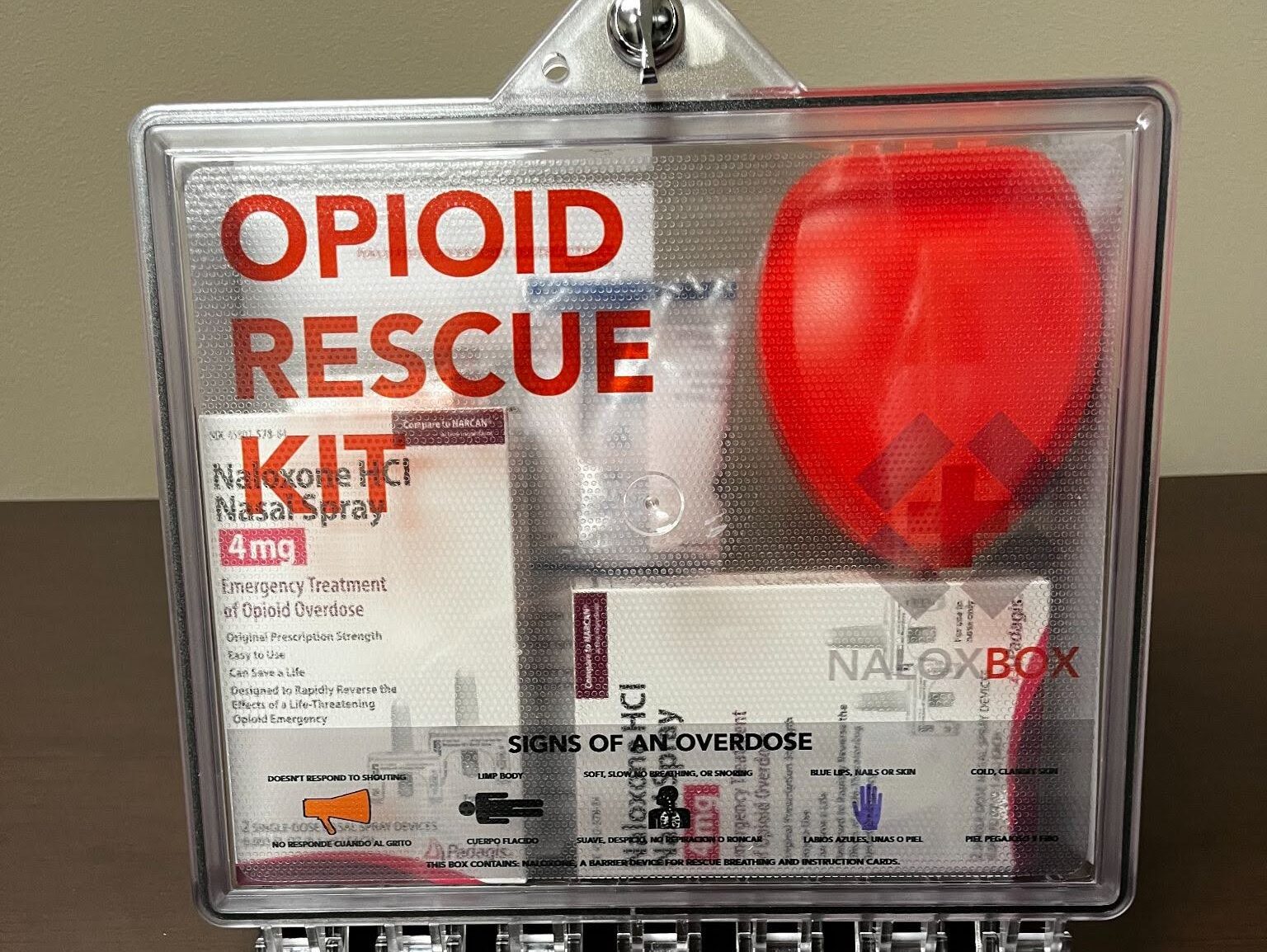
According to Summit County Public Health, there are currently no schools in the county that directly distribute naloxone. But several have NaloxBoxes, which are wall-mounted cabinets that have naloxone and instructions on how to respond to an overdose, according to Megan Scott, a Behavioral Health Services supervisor.
Kansas bill dies in Senate committee
In Kansas, HB 2489 would have required school districts to have naloxone supplies available. It would also have ordered the state Board of Education to develop guidance for instruction on the prevention of the abuse of fentanyl and other opioids. The guidance would be distributed to each school district. The bill passed the House in February, but died in a Senate committee in April.
Stacey Rogers, who lost her son to a fentanyl overdose in 2022, said the bill addressed the crisis in a realistic and lifesaving way. “It combines prevention through education with preparedness through access to naloxone,” she said.
Fentanyl is extremely lethal. Counterfeit fentanyl may be mixed in or cut with other drugs, like cocaine and Percocet.
“A lot of the people who are dying don’t know that they’re taking fentanyl,” said Kansas state Rep. Pat Proctor, R-Leavenworth, one of the bill’s sponsors.
He said the money to provide naloxone to schools would have come from opioid settlements at the national and state levels. The responsibility for providing fentanyl education and keeping a stock of naloxone would fall on the state board of education.
All students should have equitable access to overdose reversal medication if an overdose occurs in a school environment, the National Association of School Nurses said in a statement. Registered professional nurses’ expertise is necessary to implement the procedures for overdose reversal care, the statement said.
Missouri bill clears House, but not Senate
In Missouri, HB 3113 would have mandated that public buildings keep Narcan on hand and make reasonable efforts to notify occupants of its location.
“It is a vital piece of legislation designed to address the escalating crisis of fentanyl poisoning in Missouri,” bill sponsor Rep. Ann Kelley, R-Lamar, said at a committee hearing in February. “Deaths due to fentanyl have increased by over 300% in recent years, with thousands of lives lost to this silent killer.”
The bill would also have modified the Drug-Free Schools Program, calling for the development of education programs about fentanyl poisoning for students in grades six through 12.
“Each day that we delay action is another day that lives are at risk,” Kelley said. “By enacting House Bill 3113, we’re not just passing a law, we’re taking a stand against the public health crisis that threatens our families and communities.”
The bill passed the House in April, but did not make it through the Senate before the session ended.
Kayla Gleason is a senior at Kent State University studying journalism, digital media production and fashion media. Jack Bordeleau is a senior at the University of Kansas studying journalism and sports management. Xavier Asher is a student at the University of Missouri.